Set up your planning poker in seconds, start estimating story points in scrum poker now

Create a room and invite your team with one click — no signup, no email.

1
3
5
8

A personal poker room has been assigned to you.

Share the room id with your team mates so they can join the scrum poker.

Your Room ID: ----

How It Works

Create an Instant Room

Create an Instant Room

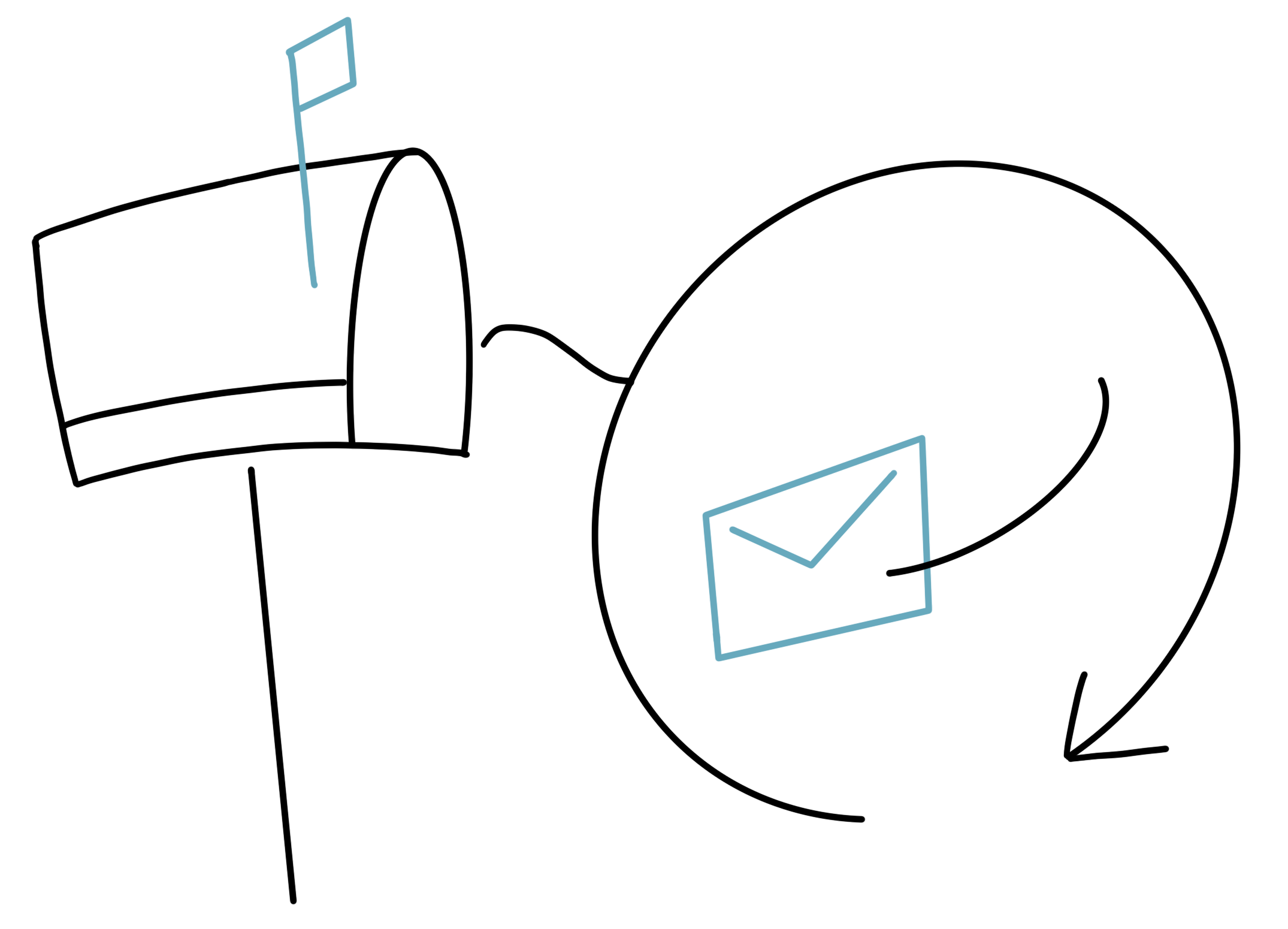
Set-up in seconds. Use the instant room feature or sign-up to keep the same room number for future plannings - making the set-up even faster.

Invite others

Invite others

Invite your colleagues to your planning poker by sharing the room id, let them scan the QR code with their mobile or just send them the link. If you have trouble to find a common timeslot, create a poll with our Doodle alternative "Whocan.org".

Start estimating stories

Start estimating stories

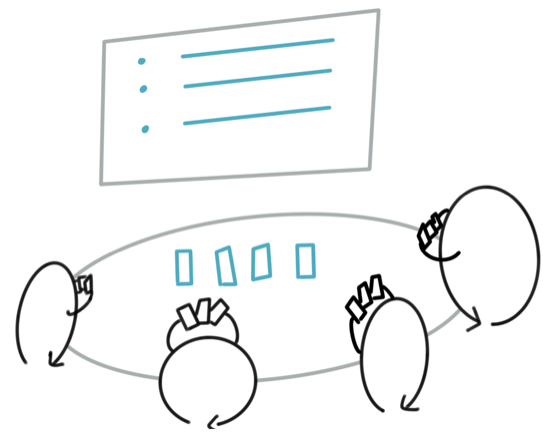
Once your team has entered the room, you can see them online and the scrum poker can start. The team can submit estimates, see who has provided estimates and show the results.

How to make story estimations successful?

Everyone who has worked with Scrum, SAFE or other agile methodologies that rely on story-point estimations to judge the complexity of a feature knows how tricky these planning poker sessions can be. At the same time everyone is painfully aware how crucial a good planning session is on one hand to make sure that the agile team agree on the acceptance criteria, the definition of done and overall scope and on the other hand to allow the product owner to make an informed decision when prioritizing the backlog.

So how exactly do you make a scrum poker session successful? To understand the recipe for successful planning we will look at what a well prepared user story is, how to present it, some best practices for the poker itself and how to deal with discrepancies between estimates.

Before estimating make sure that the user story is "ready" and was discussed

This might be a straight-forward advice but to have a successful estimation session, it is important that the feature or user story that we want to estimate is ready. So how do we get a story ready? In Scrum this is generally done during the refinement sessions, where the product owner together with the development (and often under the guidance of a scrum master) discuss the details of the story.

In our team, this starts with the product owner presenting in a succinct manner, what the user wants to be able to do and what value for him is. This second part is especially important as it should give a sense why what we are doing matters. The most widespread structure for a user story is "As a …, I want to do …, so that …".

Often the product owner will also have written down some high-level acceptance criteria, that are then discussed with the development team. Maybe counterintuitively, good acceptance criteria are high-level conditions that would satisfy the customer and allow them to achieve the value defined and not finely detailed requirement description of the solution. Together the scrum team discusses the the user story looking at the acceptance criteria and might decide to add or remove some of them or clarifying elements that are clearly out of scope.

Once everyone agrees on the acceptance criteria and the definition of done, we can move on to the actual estimation using in our case the Scrum Poker (also called Planning Poker).

Estimating using scrum poker

This is the moment where the estimation tool on scrumpoker-online.org becomes helpful. We recommend opening the session at the beginning of the refinement or planning session and have all members of the scrum team enter the room using the room ID provided. Once the user story has been discussed and all question answered all the members of the development team start estimating the complexity of the story by giving it story points. Ok, story points and complexity, you make that sound easy… but what exactly are story points and how do I know how many story points should be assigned to a story?

Story Points

Story points in scrum are an abstract measure to represent the complexity of implementing a user story. In general this "complexity" is related of course to effort, but also to risk and difficulties foreseen. The measure is abstract, because it cannot be related to a unit of time such as person days or hours.

Scrumpoker-online.org uses the fibonacci sequence (1,2,3,5,8,13,21) to estimate stories. It is also very helpful to have a reference user story that all the members of the scrum team have a good understanding of and assign it an estimate. The team can then start estimating other user stories by comparing them to the reference user story. So for example if the reference user story was estimated at 3 points, a story that has only 1 point should be three times less complex. As such the absolute value of the stories are less important than their relation to each other. And remember to stay agile and start experimenting, the more stories the team estimates the better they will get at it.

Uncovering the results

After everyone has turned in their estimates, the product owner or scrum master shows the results and if they all match, the story has been successfully estimated. If on the other hand there are some discrepancies, the members that are the furthest apart can start discussing why their estimates diverge. Most often this is an indication that there is not yet a common understanding of everything that this story entails. This discussion can lead to redefining the acceptance criteria and this is absolutely normal, this is afterall an iterative process.

Ok great, I now have an estimate but why does it matter?

A well estimated story helps greatly for the product owner to better judge if the value of a user story (or new functionality) is worth the complexity and effort to implement it. Furthermore it allows to get a better grasp on planning a sprint: after the first sprint, the team will know exactly how many story points they were able to achieve, thus the following sprint should be filled with a similar sum of story points. As the team gains knowledge and becomes more efficient, delivery of an amount of story points could be achieved faster than previously. But this is the second step – for now start estimating during your planning poker session using scrumpoker-online.org and enjoy the pleasure of trying to agree on an estimate… You will see, it will do wonders for producing a shared understanding of what is expected.

Scrum Poker FAQ

Is Scrum Poker Online free?
Yes. Creating a room, inviting your team, voting on story points, and revealing the results are all free, with no signup required. There is also a 40 USD/year Premium plan that removes ads for everyone in your room and adds a session timer, automatic average and median, a personal room ID, and an attendance indicator.
Do I need to sign up or enter an email to start?
No. You can open a room and run a full session without an account or email — just share the room ID with your team. An account is only needed if you want free extras like custom card values, or a Premium feature like a personal room ID.
What is the difference between the free version and Premium?
The free version covers the whole estimation flow: rooms, voting, reveal, reset, and sharing. Premium (40 USD/year) adds a few conveniences on top — an ad-free room for everyone who joins, a voting timer, automatic average and median, a personal reusable room ID, and an attendance indicator. The ad-free experience is tied to the room owner, so if you buy Premium, everyone in your room sees it without ads.
What do I get if I create a free account?
A free account lets you set custom card values instead of the default Fibonacci sequence — T-shirt sizes, a half-point scale, or your own — and gives the host extra controls, like deciding who can reveal, clear, or delete votes. You can sign in with Google, GitHub, Facebook, or Twitter. It stays free; Premium is a separate, optional plan.
How many people can join a room?
We do not cap the number of participants, so the whole team can join the same room. In practice most sessions are teams of 3 to 15 people — large enough for a full dev team, small enough to actually reach consensus.
Does it work for remote and distributed teams?
Yes — that is the main use case. Everyone joins the same room from their own browser by link or QR code, votes privately, and sees the results revealed at the same time. The interface is available in six languages, which helps for mixed international teams.
Can I use Scrum Poker Online on my phone?
Yes. The room works in a mobile browser, and the easiest way to join from a phone is to scan the QR code shown in the room. There is nothing to install.
Does Scrum Poker Online integrate with Jira?
No, and that is deliberate. Scrum Poker Online is a standalone estimation tool, not a backlog manager — there is no native Jira sync. Many teams keep it open in a browser tab next to Jira during refinement, which is often simpler than an embedded integration. If a tight Jira integration is a must-have, another tool may fit your team better.
How do I invite my team to a session?
Create a room and share the room ID — send the link, or let people scan the QR code shown in the room. As soon as they open it, you will see them join and can start estimating story points together.

From the Blog